Before You Build a Fence, Do You Need a Boundary Survey
You finally decide to improve your yard. Maybe it’s a fence for privacy. Maybe a small shed. Or maybe you want to level a low spot with fill dirt. It sounds simple. You own the property, so you build where you want, right?
That’s where many homeowners run into trouble.
A project that looks small can turn into a bigger problem if you build in the wrong place or ignore local rules. This is where a boundary survey and a floodplain check come in. They don’t slow you down. They keep your project from going sideways.
Why Small Projects Can Turn Into Big Problems
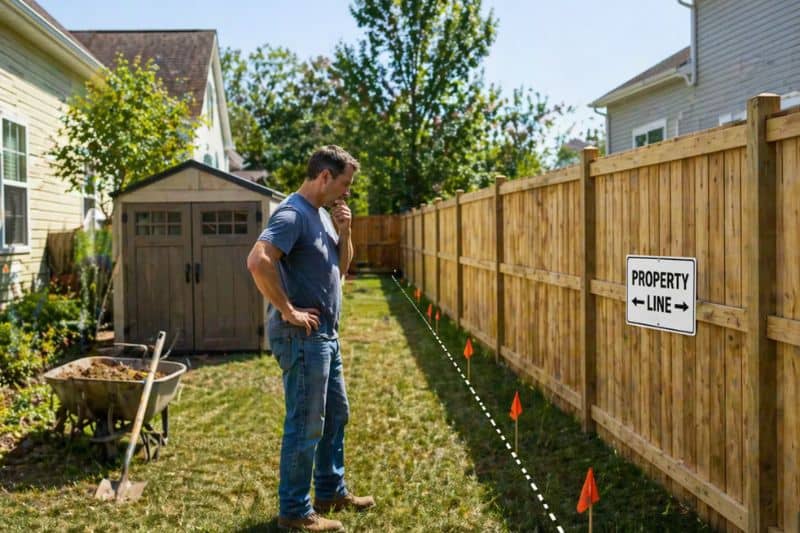
A lot of people think property lines are easy to see. They look at a fence, a tree line, or a corner stake and assume that’s the edge. Sometimes they’re right. Many times they’re not.
Daphne has a mix of older lots, newer developments, and areas with uneven ground. Because of that, lines don’t always match what you see on the surface. On top of that, some areas deal with drainage or flood concerns.
So you build a fence. A week later, your neighbor says it’s on their land. Or you add fill dirt and water starts moving into the wrong place. Now you have a problem that costs more to fix than the project itself.
A boundary survey helps you avoid that from the start.
The Most Common Projects That Trigger Boundary Issues
Certain projects cause more issues than others. Not because they’re bad ideas, but because they happen close to property lines.
Fences are the biggest one. People place them where they think the line is. A few inches off can lead to a dispute.
Sheds come next. Many homeowners place them near the edge of the yard to save space. That’s fine if the placement is correct. It’s not fine if it crosses the line.
Fill dirt creates a different problem. When you raise your yard, water has to go somewhere. If it flows into your neighbor’s property, expect complaints.
Driveways and patios can also cause trouble if they extend too far or shift drainage.
All of these situations have one thing in common. They sit right on or near your boundary. That’s where a boundary survey matters most.
How to Tell If You Might Need a Boundary Survey
Some homeowners feel confident about their lot. Others are not so sure. The difference often comes down to proof.
If you rely on what “looks right,” you’re guessing.
If you base your project on an old fence, that fence might already be wrong.
If your lot has odd angles or unclear corners, you can’t trust your eye.
If your neighbor recently built something near your side, the risk goes up.
A boundary survey gives you a clear answer. It marks your exact property lines based on legal records and field measurements. No guessing. No debate.
That clarity makes every decision easier before you spend money on materials or labor.
When Floodplain Rules Come Into Play
Now think about the ground itself. Not every part of Daphne sits at the same level. Some areas collect water faster than others.
That matters when you plan to move dirt or build structures.
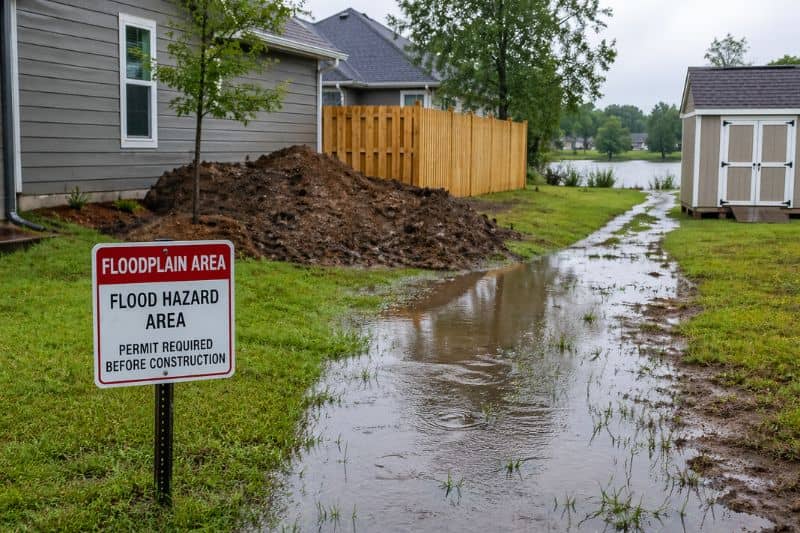
If your project changes how water flows, even a little, it can affect nearby properties. That’s why some areas require a floodplain review before you build.
Fill dirt is the most common trigger. You raise one section of land, and water shifts somewhere else. Sometimes that “somewhere else” is your neighbor’s yard.
Sheds and other structures can also affect drainage, especially in low spots.
This part is separate from a boundary survey, but they often go together. One checks your legal space. The other checks how your project interacts with the land itself.
Why Guessing Your Property Line Can Cost You More Later
A fence goes up fast. Removing it takes time and money.
A shed looks fine until someone proves it sits over the line.
Fill dirt solves one problem but creates another when water starts pooling next door.
These issues don’t show up right away. They appear after the work is done. That’s when the cost hits.
You may have to tear things down. You may need to rebuild. In some cases, you deal with legal action or city notices.
All of that starts from one simple mistake: guessing.
A boundary survey stops that before it starts. It shows you exactly where you can build so you don’t have to redo anything later.
What a Boundary Survey Actually Confirms Before You Build
A lot of homeowners think a survey is just a map. It’s more than that.
It marks your exact property corners on the ground. You can see where your lot begins and ends.
It shows your legal boundary lines based on recorded data.
It can reveal if anything crosses into your property or if you’re about to cross into someone else’s.
It also gives you confidence. You don’t need to second-guess your layout or worry about being off by a foot.
When you plan a fence, shed, or grading work, that level of certainty matters.
The Smart Way to Start Any Outdoor Project
Every project starts with an idea. Then it turns into a plan. The best plans begin with the right information.
Before you build, take a step back and look at your space. Ask yourself if you truly know where your lines are. Think about how your project might affect the ground around it.
If there’s any doubt, get it checked.
A boundary survey gives you a clear picture of your property. A floodplain review helps you avoid drainage problems. Together, they protect your time, your money, and your peace of mind.
Homeowners who take this step rarely regret it. Those who skip it often wish they hadn’t.