
ALTA Survey Details That Matter Before a Commercial Site Plan Moves Forward
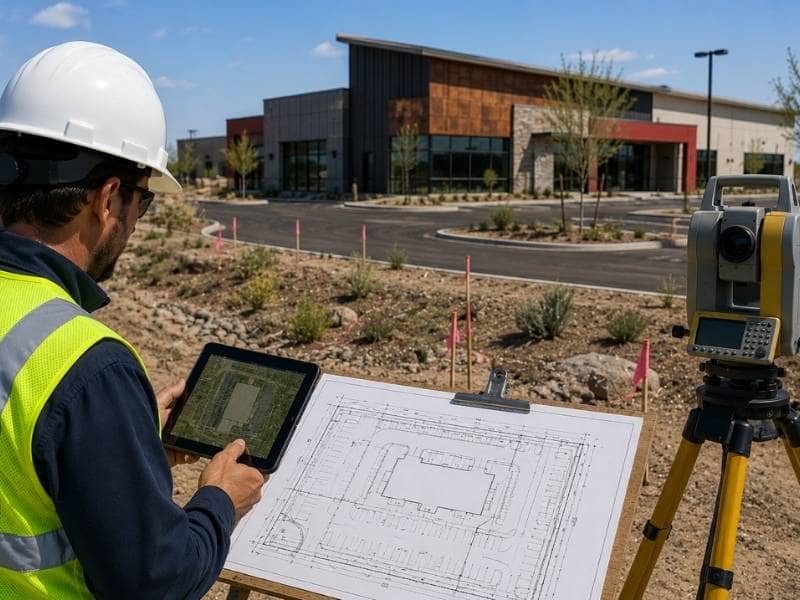
Before a commercial site plan can start, you need to know exactly what you’re working with. An ALTA survey gives developers that information. It shows property lines, access points, easements, and features already on the land, all checked against legal records. Without it, costly problems tend to show up in the middle of design or permitting.
What an ALTA Survey Shows Before a Site Plan Moves Forward
An ALTA survey is a detailed map of a commercial property. It shows boundary lines, easements, access points, utilities, and existing structures. Engineers, architects, and title companies all use it when planning a project.
Every ALTA survey follows rules set by two national groups: the American Land Title Association (ALTA) and the National Society of Professional Surveyors (NSPS). They updated these rules in 2021. The new rules require surveyors to show more detail about utility easements and property overlaps, which helps developers plan more accurately.
A regular boundary survey doesn’t show nearly as much. It won’t show utility easements, shared access agreements, or overlaps from neighboring properties. Those missing details become problems once a project is already being designed.
What an ALTA Survey Typically Shows
- Where the property lines are, based on the legal description
- Easements and rights-of-way on the property
- Buildings, paved areas, fences, and utilities already on the site
- Roads, driveways, and curb cuts
- Any overlaps with neighboring properties
How an ALTA Survey Confirms Property Lines and Site Access
An ALTA survey compares what the legal documents say with what is actually on the ground. It shows exactly where the property lines are and how people and vehicles can get to the site. Developers need this before they decide where to put buildings, parking, and driveways.
Property lines written in a deed don’t always match the lines on the ground. A surveyor checks both and finds any differences. That confirmed line is what engineers use to make sure a building stays within the required distance from the edge of the property.
Access is just as important. A site might look like it has two driveways from the street. But the survey might show that only one has legal permission to be used. The other might cross a neighbor’s land. That one detail can change the whole layout of parking and traffic flow on the site.
Why Easements on an ALTA Survey Can Change Building Plans
An easement gives someone else the right to use part of your property. Utility companies, nearby property owners, and local governments can all have easements. These easements limit where you can build. An ALTA survey puts all of them on the map before design begins.
Easements are written into title documents, but they aren’t always drawn on a map. Under the 2021 ALTA rules, surveyors must mark utility lines as proof of possible easements. This applies even when those easements weren’t in the original title paperwork. It helps developers find buried lines before construction starts.
Common Easements That Affect Commercial Sites
- Utility easements: usually 15 to 30 feet wide. You can’t build permanent structures above buried lines.
- Drainage easements: limit grading and paving near stormwater systems.
- Shared driveway easements: let a neighbor legally cross your property.
- Sewer and water line easements: limit what you can build above them and require access for repairs.
A 25-foot utility easement cutting across a site can push the whole building in a direction no one planned. Finding it during the survey costs nothing. Finding it during permit review costs weeks.
Why Existing Site Features Matter on an ALTA Survey
An ALTA survey shows what is already on the property: buildings, parking lots, fences, drainage structures, and utilities. Knowing this before design starts helps teams avoid problems between what’s there now and what they plan to build.
Most commercial sites have something on them. There might be an old building, a paved area, or utility lines from a past use. The survey shows where all of it sits compared to property lines and easements.
A building sitting too close to the property line might overlap with a required setback. A parking lot over an easement might need to be partly removed before the new project can get permits. Old utility lines that aren’t mapped can cause accidents during demolition and grading.
The engineer uses the survey for grading and drainage plans. The architect uses it for building placement. The contractor uses it for demolition work. All three need this information before they can start.
Frequently Asked Questions
What information does an ALTA survey provide for a commercial property?
An ALTA survey shows property lines, access points, recorded easements, existing structures, and utility locations. It follows the 2021 ALTA/NSPS rules, which are the highest standards for land title surveys in the United States.
Why is an ALTA survey important before creating a commercial site plan?
It shows property details that affect how the project gets designed. Finding boundary issues, access problems, and easements early prevents expensive changes during permitting and construction.
How does an ALTA survey help with property access?
It maps every road, driveway, and recorded access agreement connected to the property. That tells planners which entry points are legally allowed and how vehicles will move through the site.
Why should developers pay attention to easements shown on an ALTA survey?
Easements limit where buildings can be placed. Under the 2021 ALTA rules, surveyors must mark even unrecorded easements they find in the field. The survey often shows more than the title paperwork does.
What existing site features does an ALTA survey show?
It shows buildings, parking areas, fences, drainage structures, and utility connections already on the property. That helps the design team understand the current site before planning what comes next.