LiDAR Mapping for Developers Working Near Wetlands, Ditches, or Low Ground
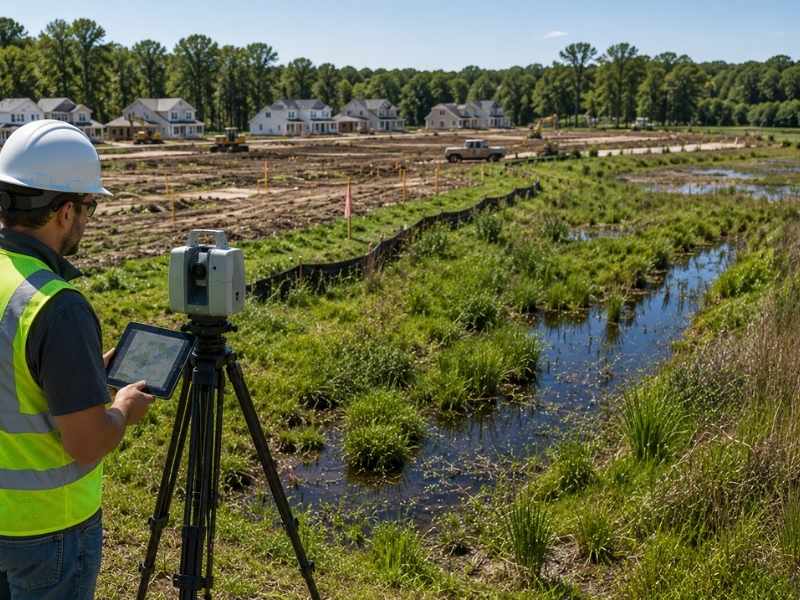
A site that looks buildable from the road can shrink fast. Wetlands, ditches and low ground all play a part. LiDAR mapping gives developers that picture early, before money goes into a design the land cannot support.
How LiDAR Mapping Shows Low Areas That May Hold Water
A site plan built on a rough sense of the land runs into trouble fast. Low areas are easy to miss during a walkthrough, and they often shrink the usable part of a site once they show up on paper. LiDAR mapping catches these spots early, while a design can still work around them.
This matters most at the decision stage. Knowing which parts of a parcel hold water changes how many buildable lots a site can support. It also affects where roads should run and how much land needs to go toward drainage instead of structures.
Skipping this step does not make the low ground disappear. It just means the discovery happens later. By then, a design is usually finished and a budget is already set.
Why LiDAR Mapping Matters When Building Near Wetlands
Wetlands are areas where water sits at or near the surface for part or all of the year. Building near them often comes with buffer rules and permitting steps. The rest of a property does not face those steps.
LiDAR mapping helps surveyors see exactly where these areas sit next to the buildable part of a parcel. That detail matters. A wetland edge that looks approximate on an older map can shift how much land actually qualifies for construction.
Knowing this early changes how a project gets designed. A developer who understands the wetland edge early can place buildings, roads and utilities around it from day one. That beats redesigning around it later.
How LiDAR Mapping Helps Developers Understand Drainage Ditches
Drainage ditches carry water away from a site. Many connect to a larger system that serves more than one property. A new development changes how much water reaches that ditch and how fast it gets there.
LiDAR mapping shows exactly where ditches sit and how the land slopes toward them. That detail helps a developer judge whether an existing ditch can handle the added runoff a new project sends its way. The ditch either has room to spare, or it does not.
This question comes up often during review. A ditch that worked fine for an open field may not handle a paved site, since paved ground sends water downhill much faster. LiDAR data gives developers and engineers the detail needed to answer that question early, not after a ditch overflows.
How LiDAR Mapping Supports Coastal Drainage Reviews
Coastal sites carry drainage questions that inland parcels do not face. Tides, storm surge and a high water table can all affect how well a site drains. Reviewers look closely at that detail.
LiDAR mapping gives reviewers detailed elevation data across the whole site. That data supports a more accurate look at how water moves, in routine rain and in big storms. It becomes part of what a drainage review checks before approving a coastal project.
Without that level of detail, a review can stall while reviewers ask for more. Starting with accurate elevation data keeps a coastal drainage review moving. It avoids sending a developer back for extra studies.
How Land Surveyors Use LiDAR Mapping to Study the Shape of the Land
Once LiDAR data is collected, its real value shows up in how developers use it. Contour maps built from that data turn raw elevation points into a clear picture. Slopes, high spots and low spots all show up across the site.
Developers use this picture to compare options before committing to a layout. One building spot might sit on stable, well drained ground, while another nearby could need heavy grading or drainage work to make it usable. That comparison happens on paper, not after construction begins.
This is where LiDAR mapping earns its place early in a project. It gives developers a tool for choosing where to build and where to leave room for drainage. It also flags where construction costs will run higher than they look from the road.
Frequently Asked Questions
How does LiDAR mapping help developers working near low ground?
LiDAR mapping shows small changes in elevation that are easy to miss on a walkthrough. That helps developers see where water is likely to collect before a design gets locked in.
Why is LiDAR mapping useful when building near wetlands?
A wetland boundary affects how much of a parcel actually qualifies for construction. LiDAR mapping shows that boundary clearly enough to plan around it from the start.
How can LiDAR mapping help developers understand drainage ditches?
LiDAR mapping shows how the land slopes toward existing ditches. That helps developers and engineers judge whether the system can handle the runoff a new project will add.
Why are drainage reviews important for coastal development?
Coastal sites deal with tides and storm surge on top of normal rainfall. Reviewers look closely at elevation data to confirm a site will drain properly under those added conditions.
How do land surveyors use LiDAR mapping during site planning?
Surveyors turn LiDAR data into contour maps that show slopes and low spots across a site. That gives developers a clear basis for comparing building locations before committing to a layout.