
Construction Staking for Driveways, Pads, and Drainage Before Crews Mobilize
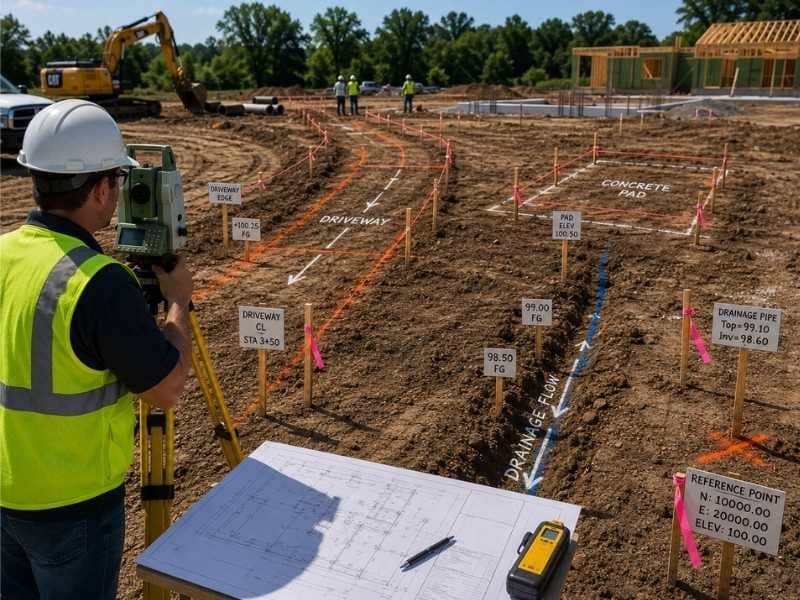
Before any equipment moves to a construction site, the ground needs clear marks showing where everything goes. Construction staking services put those marks on the land so crews know exactly where to dig and build. For driveways, concrete pads, and drainage systems, staking happens before the work starts. Getting the marks right saves time and money when heavy equipment arrives. Contractors depend on these marks to do their jobs correctly the first time.
Mark Driveway Edges and Access Routes
A driveway needs to be straight and level. Before a contractor pours concrete or places asphalt, surveyors stake the edges. These stakes show exactly where the driveway starts and stops. They also show the path the driveway needs to follow from the road to the building.
Surveyors use equipment to find the exact locations where stakes belong. They measure from known reference points on the property. They place stakes along both sides of the driveway route. They also mark the width so the contractor knows how wide to make it.
Staking also shows elevation, which is how high or low the ground needs to be. A driveway needs to slope so water drains off. Surveyors mark stakes with numbers that tell the contractor how high the finished surface should be at each point. This keeps water from pooling on the driveway.
Access routes matter too. Construction equipment needs a path to reach the building site. This path might be temporary, but it still needs clear marking. Surveyors stake the access route so equipment operators know where they can drive. This prevents damage to areas that should stay untouched.
Lay Out Concrete Pads Before Pouring
Concrete pads are flat areas where buildings or structures sit. They must be level and in exactly the right location. Surveyors stake out the corners and edges of each pad before work begins. These marks establish the construction layout the contractor follows when building the pad.
Staking shows the pad corners with pins or stakes driven into the ground. String lines connect these stakes to show the pad boundaries clearly. The contractor can see at a glance where to pour concrete. This prevents mistakes that would be expensive to fix after concrete hardens.
Surveyor marks also show elevation for the pad surface. The finished pad needs to be level across its entire area. Surveyors place stakes with height markings so contractors know the target elevation. This keeps water from sitting on top of the finished pad.
Pad staking is especially important for multiple structures. If a project has several pads for different buildings, each one must be positioned correctly. Mistakes in positioning one pad affect the whole site layout. Accurate staking from the start prevents these problems.
Stake Drainage Routes Before Grading
Drainage systems move water away from buildings and off the property. These systems need to flow downhill naturally. Surveyors stake the drainage routes to show where pipes and ditches should go. They also show how much slope the drainage needs to work properly.
Grades for drainage must be precise. Pipes need to slope at least a quarter inch per foot to keep water flowing. Too little slope and water sits in the pipe. Too much slope and the pipe can crack or break. Surveyor marks show the exact grade needed.
Staking also marks utility trenches where drainage pipes go underground. These trenches cross the property along specific paths. Stakes show the contractor where to dig. This prevents digging in the wrong places and hitting utilities or building foundations.
Low points where drainage collects also get marked. These areas might become French drains or collection systems. Staking shows their exact locations and depths. Contractors know where to build these systems so water actually flows to them.
Set Up Reference Points Before Equipment Arrives
Heavy equipment moving around a construction site can damage stakes and marks. Before equipment arrives, surveyors set up reference points that are safe from damage. These backup marks stay far enough from the work area so equipment won’t disturb them.
Reference points might be marks on existing structures or permanent features. They might be pins set in concrete or bedrock. They might be reference lines cut into trees or rocks at the property edge. These points stay fixed throughout construction.
Construction staking uses reference points as the starting place for all measurements. If a stake gets knocked over or moved, the surveyor uses reference points to put a new stake in the exact same spot. This keeps the whole project accurate even as work progresses.
Reference points also help coordinate between different trades. The excavation contractor, the concrete contractor, and the drainage contractor all use the same reference points. Everyone knows they are measuring from the same base. This prevents one trade from building something in the wrong place that conflicts with another trade’s work.
Check Stakes Before Contractors Begin Work
Before any work starts, contractors and surveyors walk the site together. They look at every stake and mark. They make sure the marks match the construction plan. They discuss any questions about what the marks mean.
This walkthrough catches mistakes before heavy equipment arrives. If a mark is in the wrong place, the surveyor can fix it. If the contractor misunderstands what a mark means, they can ask questions. This communication prevents expensive rework later.
Contractors also learn what marks are temporary and what marks need to stay throughout construction. Some stakes guide early work and get removed later. Other reference marks stay in place the entire project. Understanding this saves time and prevents accidental stake removal.
Frequently Asked Questions
What is construction staking used for?
Construction staking marks the exact locations where driveways, building pads, drainage systems, and other site features need to go. These marks guide contractors so they build in the right places.
Why is staking important before crews arrive?
Staking shows contractors where everything belongs before they arrive with equipment. This prevents mistakes that are expensive to fix. Contractors can work faster because they know exactly where to dig and build.
Can contractors see stakes from equipment?
Good staking uses stakes that are tall enough to see from equipment. Surveyors often paint stakes bright colors or place them in easy-to-see spots. Some marks use string lines so they’re visible across the whole site.
What happens if a stake gets knocked over?
Surveyors use reference points to relocate knocked-over stakes in the same exact spot. The project stays accurate as long as reference points stay undamaged.
Should driveways be staked differently than building pads?
Driveways and pads need slightly different information marked. Driveway stakes show edges and slope direction. Pad stakes show corners and level surface elevation. Both use the same staking methods but mark different details.