
What Is a Topographic Survey? A Simple Homeowner Guide
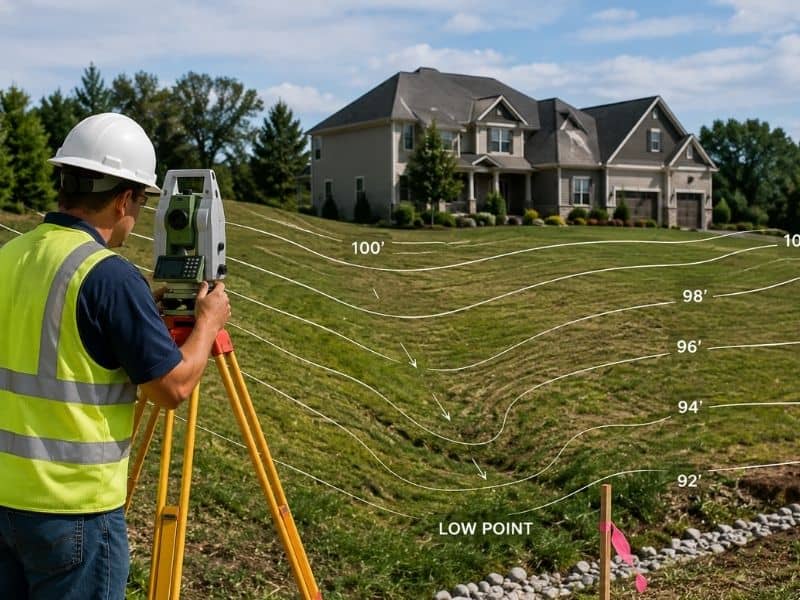
Your contractor just gave you a list of things you need before building starts. Near the top of the list: a topographic survey. You nod like you understand it. But honestly, many homeowners do not know what it means.
That is completely normal.
Most people think a topographic survey is just another permit requirement. Something you pay for and forget about later. But the truth is, it may be one of the most important parts of your project.
A topographic survey helps show how your land handles water, slopes, and drainage before construction begins. In Daphne, where the land is flat and heavy rain is common, that information matters more than many homeowners realize.
What Is a Topographic Survey?
A topographic survey, often called a topo survey, is a detailed map of your land. It shows the shape and elevation of the property instead of only showing the property lines.
A boundary survey tells you where your property starts and ends. A topographic survey shows how the land actually behaves.
A Topographic Survey Can Show:
- Changes in elevation across the property
- Where water naturally flows
- Low spots that may flood
- Trees, ditches, and creeks
- Existing buildings and driveways
- Fences and retaining walls
- Utility locations in some cases
This information helps homeowners, builders, and engineers understand how the property may react during heavy rain or future construction.
That is especially important because even small changes in elevation can affect drainage.
Why Elevation Matters
Daphne sits near Mobile Bay on flat coastal land. The area also gets strong Gulf Coast storms and heavy rainfall throughout the year.
In some places, just a few inches of elevation can change where water collects after a storm. Water may drain away from one house but flow directly toward another.
Baldwin County is also growing quickly. New neighborhoods, roads, and commercial projects can change how water moves across nearby properties.
That means drainage patterns from several years ago may not look the same today.
A topographic survey helps answer important questions before building starts:
- Will water drain away from the house?
- Are there low areas that collect water?
- Could grading changes affect nearby properties?
- Is the land safe for the planned project?
Getting those answers early can help homeowners avoid expensive problems later.
How Is a Topographic Survey Different From Other Surveys?
Many homeowners hear different survey terms and assume they all do the same thing. They do not.
Boundary Survey
A boundary survey shows property lines and corners. Homeowners often need it for:
- Fence projects
- Property disputes
- Buying land
- Checking encroachments
Topographic Survey
A topographic survey focuses on elevation and drainage. It is often needed for:
- New home construction
- Additions and garages
- Pool installation
- Drainage work
- Grading plans
- Permit approvals
ALTA Survey
An ALTA survey is mostly used for commercial real estate projects and large property purchases.
Mortgage Survey
A mortgage survey is a simple property drawing lenders may request during closing.
In many cases, homeowners may need both a boundary survey and a topographic survey for the same project.
How Does a Surveyor Perform a Topographic Survey?
A licensed land surveyor handles the process from start to finish.
First, the surveyor researches the property using:
- Deeds
- Plat maps
- Existing surveys
- County records
Next, a field crew visits the property with special equipment such as GPS systems and total station instruments.
The crew collects many elevation points across the lot. They also locate important features like:
- Buildings
- Driveways
- Trees
- Drainage areas
- Fences
- Utility features
After the fieldwork is complete, the surveyor creates a detailed drawing that shows:
- Contour lines
- Elevation points
- Existing improvements
- Drainage flow
- Site features
The final survey is signed and stamped by the licensed surveyor.
For most residential lots, the process usually takes one to two weeks depending on the size of the property and weather conditions.
When Do Homeowners Need a Topographic Survey?
Many homeowners are surprised to learn how often topo surveys are needed.
Building a New Home
Most new construction projects require grading and drainage plans before permits are approved.
Engineers use topographic surveys to design safe drainage around the home.
Adding a Garage or Room
Even smaller additions can affect drainage patterns on a property. Some projects may require updated topo data during the permit process.
Installing a Pool
Pools change how water moves through a yard. A topographic survey helps contractors prevent drainage problems around the pool area.
Solving Drainage Problems
If water collects in your yard after every storm, a topographic survey can help show why it is happening.
The survey gives contractors clear information instead of forcing them to guess.
Buying Vacant Land
Raw land may look fine during dry weather but still have serious drainage problems.
A topographic survey helps buyers understand the property before construction begins.
After Flooding
Many homeowners now use topographic surveys after flooding events to see if poor grading is making drainage problems worse.
How Much Does a Topographic Survey Cost?
Most residential topographic surveys cost between $1,500 and $5,000.
The final price depends on:
- Property size
- Tree coverage
- Terrain conditions
- Accessibility
- Permit requirements
Wooded or irregular lots often cost more because they take longer to survey.
Although that may sound expensive at first, skipping the survey can cost far more later.
Without proper topo data, homeowners may face:
- Permit delays
- Failed inspections
- Flooding problems
- Expensive grading repairs
- Construction disputes
Compared to the full cost of a building project, a topographic survey is usually a smart investment.
Why Topographic Surveys Matter More on the Eastern Shore
Topographic surveys are important everywhere, but they matter even more in Daphne and across the Eastern Shore.
That is because the area has:
- Flat coastal land
- High groundwater levels
- Heavy rainstorms
- Rapid development
- Changing drainage patterns
Even a small grading problem can create standing water around a home during strong storms.
The sooner homeowners understand how their land handles water, the easier it becomes to avoid expensive repairs later.
FAQs
How long does a topographic survey take?
Most residential topographic surveys take one to two weeks depending on the property size, weather, and scheduling demand.
Does Baldwin County require a topographic survey?
Many construction and grading projects in Baldwin County require topographic data before permits are approved.
Can a topographic survey help with drainage problems?
Yes. A topographic survey shows how water moves across a property and helps identify low spots and grading problems.
What is the difference between a boundary survey and a topographic survey?
A boundary survey shows property lines. A topographic survey shows elevation, drainage, and physical features across the land.
Is a topographic survey needed before installing a pool?
In many cases, yes. Pool projects can change drainage patterns, so elevation data helps prevent future water problems.