
Elevation Survey Questions Buyers Should Ask Before Closing
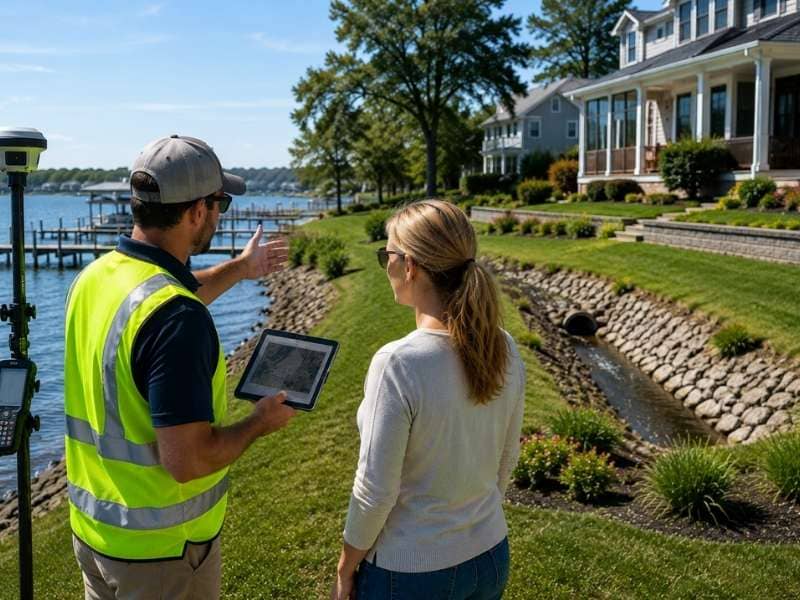
Buying a home near water takes more research than buying inland. The land itself matters as much as the house. An elevation survey shows how the property sits on the ground, how high the home is compared to the area around it, and whether the land has changed over time. Buyers who ask the right questions before closing have a much clearer picture of what they’re getting.
Is the Home High Enough Above the Ground?
The height of a home above the surrounding land affects how water behaves during heavy rain or a storm surge. A house that sits low compared to the yard and street nearby faces a higher chance of water reaching the foundation or entering the structure. One that sits higher has more natural protection.
An elevation survey measures the height of the home and compares it to the land around it. Buyers should ask what that comparison shows. If the home sits in a low spot, water from nearby areas can move toward it during a flood event rather than away from it. Knowing this before closing gives buyers a realistic picture of the property’s vulnerability.
Have Storms or Erosion Changed the Property?
Land near bays, rivers, and coastal areas changes over time. Storms can shift soil, reshape shorelines, and erode ground that was once stable. Heavy rain can wash away fill material or change the grade of the land in ways that aren’t obvious from a simple walkthrough.
Buyers should ask whether the elevation survey reflects current conditions or was done several years ago. An older survey may show the property as it looked before a major storm or after years of gradual erosion that changed the terrain. A recent survey gives a more accurate picture of what the land actually looks like now and whether any changes have affected the stability or drainage of the lot.
Does Water Drain Away From the House?
The slope of the land around a home determines where water goes after it rains. Ideally, the ground slopes away from the foundation on all sides so water moves away from the house and doesn’t collect around it. When the land slopes toward the house or sits flat with no clear drainage path, water can pool near the foundation and cause long-term problems.
An elevation survey shows the grade of the land and how it directs water flow. Buyers should ask whether the survey data shows water draining away from the home or collecting near it. This question is especially important for homes close to the water where the ground is often flat and drainage can be slow. Understanding this before closing helps buyers know what they may be dealing with after a heavy rain.
Can the Property Support Future Outdoor Projects?
Many buyers near the water plan to add a pool, a patio, a garage, or an extended driveway at some point after moving in. Whether those projects are possible depends on the land itself. Low spots, steep grades, soft soil areas, and drainage issues can all limit where improvements can be placed and how they need to be built.
An elevation survey provides the land data that builders and contractors use when planning outdoor projects. Buyers who ask for that information before closing can find out early whether the lot can support their plans. A property that looks perfect from the outside may have grade or drainage challenges that make certain projects much more expensive or difficult to complete than expected.
Should You Ask for an Updated Elevation Survey?
Survey documents have an age. The older a survey is, the less accurately it may reflect what’s on the ground today. Land near water is especially likely to change over time. Fill material settles. Shorelines shift. Neighboring construction can change drainage patterns across several lots.
Buyers should ask when the most recent elevation survey was completed and whether a new one is available. If the existing survey is several years old, requesting an updated one before closing is a reasonable step. An updated survey reflects the current state of the property, not how it looked after the last transaction. That information gives buyers the most accurate foundation for their decision.
Frequently Asked Questions
What is an elevation survey?
An elevation survey measures the height of the land and structures on a property. It shows how high the home sits compared to the surrounding ground and helps identify how water moves across the lot.
Why should I review an elevation survey before closing?
It gives buyers a clear picture of the property’s terrain, drainage, and how the home relates to the land around it. That information helps buyers understand possible concerns before the purchase is final.
Can an elevation survey show drainage problems?
Yes. An elevation survey shows the slope of the land and whether water tends to drain away from the home or collect near it. That information is useful for understanding how the property handles rain.
Can an elevation survey help with future projects?
Yes. Builders and contractors use elevation data when planning pools, patios, driveways, and other outdoor improvements. Reviewing the survey before closing helps buyers understand what the land can support.
Can an older elevation survey become outdated?
Yes. Changes to the land from storms, erosion, nearby construction, or settling can make older survey information less accurate. An updated survey reflects the current condition of the property.