
Topo Survey Data Builders Need Before Grading a Sloped Lot
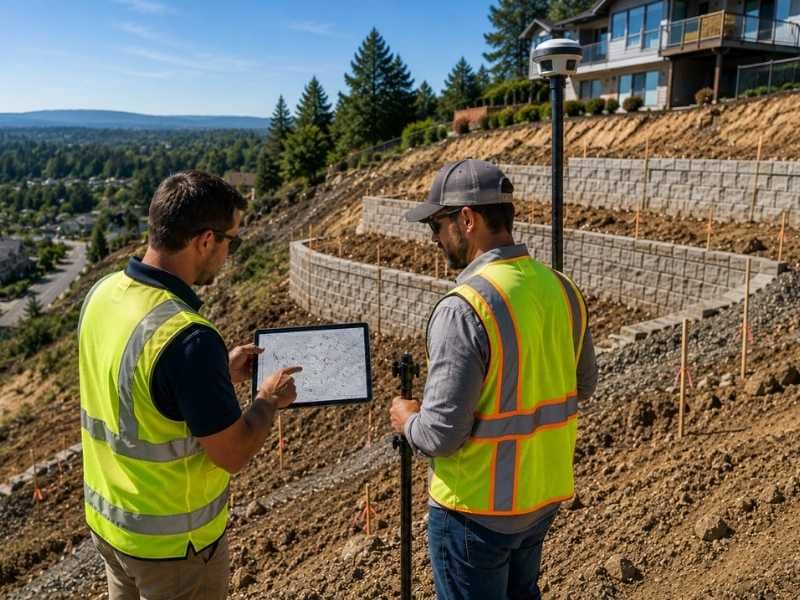
Grading a sloped lot is not the same as grading flat ground. The land pushes back. Every decision about where to cut, where to fill, and where to build has to work with the natural shape of the site. A topo survey gives builders the elevation data they need to make those decisions before the work starts. Without it, problems that could have been caught early show up in the middle of construction when they cost the most to fix.
How Slope Affects Retaining Wall Placement and Design
When a lot drops significantly from one end to the other, retaining walls often become part of the plan. They hold soil in place, create usable flat areas, and protect foundations from shifting ground. But putting a retaining wall in the wrong spot, or designing one without knowing the full grade, creates structural problems over time.
A topo survey shows exactly how much the land drops and where that drop happens. Builders use that data to decide how tall a wall needs to be, how many walls the site requires, and where each one should sit. A wall built without accurate elevation data may not hold the right amount of soil or may sit too close to a foundation to work safely. Getting those decisions right starts with knowing the actual grade at every point on the lot.
When Grading Triggers Stormwater Compliance Requirements
Moving soil on a sloped lot changes how water flows across it. What once drained slowly through natural vegetation now moves faster across compacted or exposed ground. In many areas, grading projects that disturb a certain amount of land must meet stormwater management requirements before a permit gets approved.
A topo survey helps builders understand the existing drainage patterns before any soil gets moved. That information feeds directly into the stormwater plan. Engineers use the survey data to calculate runoff rates, size drainage structures, and design swales that handle the increased flow from graded surfaces. Submitting a grading permit without this information often leads to requests for more documentation, which stalls the project before it begins.
How Topo Data Guides Septic System Placement on Sloped Sites
On lots without access to a public sewer line, a septic system has to go somewhere on the property. Sloped lots add complications. The drain field needs enough flat, usable area at the right depth. It also has to sit at a safe distance from the building, the well if there is one, and the property lines. Slope affects all of those relationships.
A topo survey gives the builder and the septic designer a shared picture of the lot. It shows where the usable flat areas are, how deep the grade changes, and whether the planned location for the system is realistic. Placing a septic system in the wrong spot on a sloped lot can fail inspections, require costly relocation, or create long-term drainage issues that affect the whole property. Topo data removes most of that guesswork before the first stake goes in the ground.
How Grade Changes Influence Foundation Type Decisions
Not every foundation works on every lot. A sloped lot often rules out a simple slab-on-grade foundation because the ground drops away too much from one side of the building to the other. In those cases, builders may need a stem wall, a pier-and-beam foundation, or a basement design that accounts for the grade difference.
Each of those foundation types has different cost and construction requirements. Topo survey data gives the engineer the numbers needed to evaluate which type fits the site and design it correctly. A foundation chosen without accurate slope data may need to be redesigned after the permit is submitted or, in worse cases, after excavation begins. Both of those situations add cost and time that topo data gathered early would have prevented.
How Grading Plans Protect Neighboring Properties From Runoff
Grading a sloped lot changes where water goes. On a natural site, runoff spreads out and soaks in gradually. On a graded site with compacted soil and new surfaces, water moves faster and in more concentrated paths. If that water runs toward a neighboring property, it can cause erosion, flooding, or damage that creates legal problems for the builder and the homeowner.
A topo survey shows how the land slopes toward neighboring lots and where runoff currently exits the property. Builders use that data to design grading plans that direct water away from adjacent properties and toward appropriate drainage outlets. Getting this right matters not just for the neighbors but also for permit approval, since many jurisdictions require proof that a grading plan doesn’t increase runoff onto adjacent land.
Frequently Asked Questions
What is a topo survey?
A topo survey is a map that shows the shape of the land and changes in elevation across a property. Builders use it to understand how the ground rises and falls before making grading and construction decisions.
Why do builders need a topo survey before grading a sloped lot?
A topo survey shows the exact grade of the land so builders can plan retaining walls, drainage, foundations, and soil movement before work begins. Without it, builders have to guess, and mistakes on sloped lots are expensive to correct.
Can a topo survey help with stormwater compliance?
Yes. Topo data shows existing drainage patterns and helps engineers design grading plans that meet stormwater permit requirements before construction starts.
Does a topo survey affect foundation decisions?
Yes. The grade data from a topo survey helps engineers choose the right foundation type for a sloped lot and design it correctly for the site conditions.
Can grading a sloped lot affect neighboring properties?
Yes. Changing the grade changes where water flows. A topo survey helps builders plan grading that directs runoff away from neighboring lots and meets local drainage requirements.