
Boundary Survey Before Tree Clearing, Fencing, or Lot Cleanup
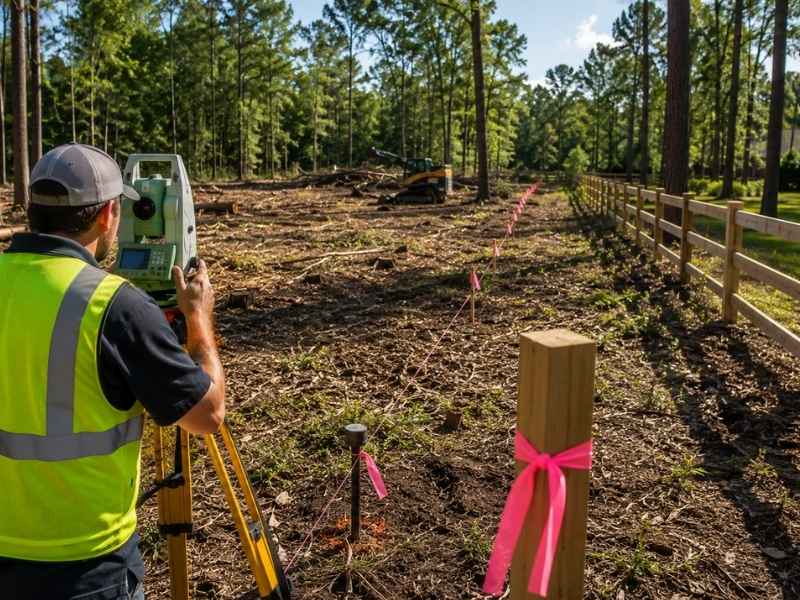
A boundary survey shows you where your land begins and ends. You want that answer before a chainsaw, a fence post, or a clearing crew ever shows up. Skipping this step doesn’t just risk a messy argument. It risks doing costly work on land that isn’t yours.
Start with a Boundary Survey
Most projects start with a plan for what to build or clear. They don’t start with a check on where the line actually sits. That works fine until the project gets close to the edge of the lot.
A boundary survey clears up that guesswork first. It gives you a real, confirmed line marked on your land. It doesn’t rely on an old fence or a quick guess in the yard. Once you have that line, every choice after it rests on something solid.
Clear Trees Without Crossing the Line
Tree clearing feels harmless until it isn’t. Cutting brush or taking down a tree on a neighbor’s land can lead to real trouble. You might end up paying to replace what you cut, and that cost adds up fast.
A boundary survey shows exactly where clearing should stop. This matters most in spots with thick brush or trees near the edge of a lot. It’s hard to guess where one yard ends and the next begins. Crews working from a marked line don’t have to guess. Homeowners don’t have to worry about an angry call later.
Fence the Right Area
Placing a fence isn’t just about staying off your neighbor’s land. It’s also about staying inside the setback rules your local permit office sets. Those rules often push the fence a few feet in from the true line, not right on top of it.
A boundary survey gives you both answers at once. You get the real edge of your lot, plus a fixed point to measure any setback from. Without a survey, your fence crew is working off a guess. An inch or two off can trigger a failed inspection or a forced teardown. Confirming the line and the setback first keeps the whole job on track.
Rural Lots Can Have Hard-to-Find Property Lines
Coastal land, rural acreage, and lots near the edge of a subdivision often lack clear markers. City lots usually give you some visual clues, like fences, sidewalks, and nearby homes. Rural and edge lots rarely offer that help.
Thick brush or grass can bury old markers completely. Rural land sometimes has survey records that are decades old, based on older tools and methods. A boundary survey clears all of that up. It sets the line again with today’s tools, no matter how buried or old the markers are.
Save Time by Knowing Your Property
Planning tree work, fencing, and lot cleanup around a confirmed line saves real time. Crews can start work right away instead of stopping to guess where the line falls. That keeps the whole project moving on schedule.
Skipping the survey costs time in a different way. A project that hits a boundary question halfway through often grinds to a stop. Someone has to dig up old records or call a surveyor anyway, just later and under more pressure. Getting the survey done first skips that stall completely.
A confirmed line also helps with future work. Once the boundary is marked and on record, later projects like landscaping, a shed, or more fencing can use that same line. Nobody has to start the research over.
Frequently Asked Questions
What is a boundary survey?
A boundary survey is fieldwork done by a licensed surveyor. They find and mark the legal edges of a property. They use old records plus measurements taken on site to confirm exactly where a lot starts and stops.
Do I need a boundary survey before clearing trees?
You don’t have to get one by law in most cases. But it’s a smart move any time trees or brush sit close to the edge of your lot. Clearing land that belongs to a neighbor can lead to disputes and costs you didn’t plan for.
Can a boundary survey help before building a fence?
Yes. A boundary survey confirms the real property line. It also gives you a fixed point to measure any required setback from. That helps your fence crew place the structure right the first time, instead of risking a failed inspection later.
How long does a boundary survey take?
Timing depends on the size of the land, the terrain, and how easy it is to find old records and markers. A small, well documented lot can move fast. A large rural tract with thin records usually takes longer.
Why is a boundary survey helpful for rural land?
Rural and edge-of-subdivision lots often skip the visual clues that make a boundary easy to guess in a normal neighborhood. A boundary survey sets the line again using today’s tools, even when old markers are missing or buried.