↓
 

Daphne Land Surveying

...a Brandon Bailey, PLS website.

Daphne Land Surveying - Brandon Bailey header
Daphne Land Surveying
  • Home
  • Land Surveying
  • ALTA Title Survey
  • Boundary Survey
  • Construction Survey
  • Drone LiDAR Mapping
  • Lot Survey
  • Elevation Certificate | Flood Survey
  • Flood Survey
  • Blog
  • Contact Us
Home 1 2 3 … 8 9 >>

Post navigation

← Older posts

Welcome to Daphne Land Surveying

Daphne Land Surveying Posted on March 9, 2017 by AdminDaphneLSMarch 9, 2020

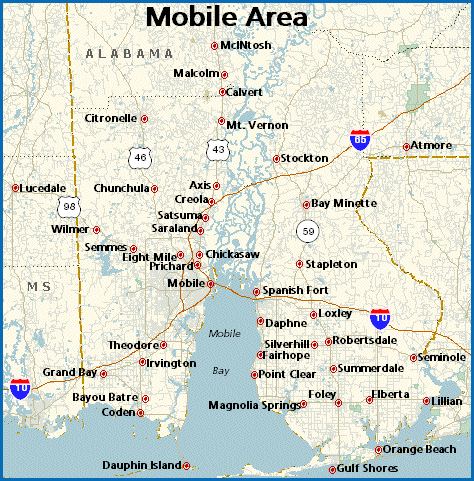
Welcome to Daphne Land Surveying‘s website. This site is intended to provide you with information on Land Surveying in the Daphne, AL, and Baldwin County area of Alabama. If you’re looking for a Daphne Land Surveyor, you’ve come to the right site.

If you’d rather talk to someone about your land surveying needs, please call (251) 270-4140 today or better yet send us a contact form request. For more information, please continue to read

Land Surveyors are professionals who measure and make precise measurements to determine the size and boundaries of a piece of real estate.  While this is a simplistic definition, boundary surveying is one of the most common types of surveying related to home and land owners.

If you fall into the following categories, please click on the appropriate link for more information on that subject:

  1. I need to know where my property corners or property lines are. (Boundary Survey)
  2. I have a loan closing or re-finance coming up on my home in a subdivision. (Lot Survey)
  3. I need a map of my property with contour lines to show elevation differences for my architect or engineer. (Topo Survey)
  4. I’ve just been told I’m in a flood zone or I ‘ve been told I need an elevation certificate in order to obtain flood insurance or prove I don’t need it. (Flood Survey)
  5. I’m purchasing a lot/house in a recorded subdivision. (Lot Survey – See Boundary Survey)
  6. I’m purchasing a large tract of land, acreage, that hasn’t been subdivided in the past. (Boundary Survey)
  7. I need to get some location and grades set on a construction project. (Construction Survey)
  8. I need a survey of a commercial or multi-family site that meets the ALTA Land Title Survey requirements. (ALTA Survey)

If your needs don’t fall into one of the above, don’t worry, we’ll get to the bottom of it.  CALL Daphne Land Surveying TODAY at (251) 270-4140 or better yet fill out our contact form here or in Sidebar to discuss your survey needs.

mobile land surveying


Posted in blog, land surveying | Tagged boundary survey, Daphne AL Land Surveyor, FEMA, flood map, Land Surveying, land surveyor, Land Surveyor Daphne AL

How to Find Property Lines on Older Properties

Daphne Land Surveying Posted on May 29, 2026 by AdminDaphneLSMay 28, 2026
Aerial view of older residential properties with highlighted property lines and lot boundaries

Older properties create problems fast when property lines are unclear. Developers may see old fences, worn markers, or outdated deeds that no longer match what exists on the ground.

That creates risk before grading, planning, or construction begins.

Knowing how to find property lines on older properties helps avoid delays, neighbor disputes, and expensive layout mistakes later.

Why Older Properties Create Boundary Problems

Older parcels often have records that were created decades ago.

Some legal descriptions use landmarks that no longer exist. Others contain measurements that do not match modern mapping standards.

Common problems include:

  • Missing survey markers
  • Old fences in the wrong location
  • Trees used as boundary references
  • Conflicting deed descriptions
  • Subdivision changes over time

Developers run into trouble when they assume old boundaries are still accurate.

How to Find Property Lines Using Existing Deeds

The first step is reviewing the deed.

A deed may describe:

  • Property dimensions
  • Corner references
  • Adjacent parcels
  • Recorded easements
  • Historic lot information

Some older deeds are vague. They may reference old roads, creeks, or landmarks that changed years ago.

Developers should compare the current deed with neighboring records when possible.

That helps uncover conflicts early.

Old Surveys Can Help Locate Property Lines

Past surveys are useful when available.

They may show:

  • Original corner markers
  • Fence locations
  • Building setbacks
  • Utility easements
  • Previous encroachments

Still, older surveys should not be treated as perfect.

Some were completed before modern GPS equipment became common. Others may not reflect later changes to the property.

A newer boundary survey is often needed before development work begins.

Property Pins Are Not Always Easy to Find

Many people expect property pins to sit clearly at every corner.

That rarely happens on older land.

Markers may become:

  • Buried underground
  • Covered by grass
  • Bent during construction
  • Removed during grading
  • Hidden by tree growth

Some markers disappear completely over time.

Developers should avoid digging blindly or guessing where corners exist.

Fences Do Not Always Follow Legal Property Lines

Old fences cause confusion often.

A fence may look permanent, but that does not mean it follows the legal boundary.

Some were built for convenience years ago. Others shifted during repairs or rebuilding.

Developers should never assume a fence defines ownership without survey verification.

That mistake creates legal problems fast.

GIS Maps Have Limits

Online parcel maps are useful for basic reference.

They are not legal survey documents.

GIS maps may contain:

  • Offset boundaries
  • Approximate dimensions
  • Outdated parcel shapes
  • Incorrect corner placement

Many developers trust online maps too much.

A rough parcel image should never guide construction layout or site planning.

Trees, Creeks, and Old Landmarks Create Problems

Older legal descriptions sometimes reference natural landmarks.

Examples include:

  • Oak trees
  • Fence rows
  • Creeks
  • Dirt roads
  • Stone piles

Those features change over time.

A creek may shift. Trees die. Roads move. Fence rows disappear.

That makes boundary research harder on older sites.

Neighboring Properties Can Reveal Boundary Clues

Nearby parcels sometimes help solve boundary issues.

Surveyors may compare adjoining deeds and corner evidence to confirm property lines.

This process matters when:

  • Markers are missing
  • Measurements conflict
  • Subdivision records are incomplete
  • Old plats contain errors

Developers often overlook how connected neighboring records can be.

Boundary work rarely involves one parcel alone.

Encroachments Are Common on Older Lots

Encroachments happen more often than many developers expect.

Common examples include:

  • Driveways crossing lines
  • Sheds over setbacks
  • Retaining walls on adjacent land
  • Utility lines outside easements
  • Fences crossing boundaries

Some encroachments existed for decades before anyone noticed them.

That becomes a serious issue once development begins.

How to Find Property Lines Before Development Starts

Developers should confirm boundaries before:

  • Site design
  • Drainage planning
  • Utility installation
  • Grading work
  • Permit applications

Waiting too long creates risk.

Bad boundary data can affect setbacks, parking layouts, access roads, and utility placement.

Fixing those mistakes later costs far more.

Signs a New Boundary Survey Is Needed

Older properties usually need updated survey work when:

  • Boundary markers are missing
  • Old surveys conflict
  • Fences look questionable
  • The property changed ownership many times
  • New construction is planned
  • Easement locations are unclear

Developers should treat uncertain property lines as a warning sign.

Ignoring them creates expensive surprises later.

How Surveyors Confirm Older Property Lines

Surveyors combine field evidence with legal research.

They may review:

  • Deeds
  • Recorded plats
  • Historic surveys
  • County records
  • Neighboring parcel information

Field crews also search for physical evidence such as markers, monuments, fence remnants, and corner pins.

The process takes time on older sites.

That is normal.

Common Mistakes Developers Make

Relying on Verbal Property Descriptions

Neighbors often believe they know where lines exist.

Sometimes they are wrong.

Verbal information should never replace legal survey data.

Starting Site Work Too Early

Some developers begin clearing or grading before verifying boundaries.

That creates avoidable problems.

Trusting Old Fences

Fences may look official. Many are not.

Boundary lines still require proper verification.

Why Accurate Property Lines Matter

Property line mistakes affect more than ownership.

They can impact:

  • Site approvals
  • Drainage design
  • Utility routing
  • Parking layouts
  • Access roads
  • Building setbacks

Developers who confirm boundaries early avoid many of the worst delays.

Frequently Asked Questions

How can I find property lines on older properties?

Start with the deed, prior surveys, and county records. A professional boundary survey may still be needed to confirm legal lines.

Are old fences accurate property boundaries?

Not always. Many fences do not match legal property lines.

Can online parcel maps show exact property lines?

No. GIS maps are reference tools and should not replace a boundary survey.

Why are property markers missing on older land?

Markers may become buried, damaged, moved, or removed over time.

When should developers order a boundary survey?

Before design, grading, utility work, or permit applications begin.

Posted in land surveying | Tagged boundary survey, find property lines

Boundary Survey Cost Factors

Daphne Land Surveying Posted on May 28, 2026 by AdminDaphneLSMay 28, 2026
Aerial view of a residential corner lot showing property boundaries and lot layout in Daphne, Alabama

Boundary survey cost factors matter more than most developers think. A cheap survey can turn expensive fast when property lines are unclear, old records conflict, or missing markers slow the work down.

Many projects run into delays because the survey work was treated like a simple box to check. That mistake costs time and money.

This guide explains what affects boundary survey pricing, what can increase costs, and what developers should review before ordering a survey.

Why Boundary Survey Cost Factors Change From Property to Property

No two parcels are alike.

Some sites are simple and open. Others have thick trees, old fences, missing pins, or bad legal descriptions. Those details affect the amount of work needed in the field and office.

A flat, cleared parcel may cost much less than wooded land with old deeds and unclear corners.

Property Size Affects Survey Cost

Larger parcels usually take more time to survey.

The crew may need to:

  • Walk longer distances
  • Search for more corners
  • Review more records
  • Set additional markers

Large tracts with streams, wooded areas, or uneven terrain can also slow field work.

Still, size alone does not control the final price. A smaller parcel with legal issues can cost more than a larger clean site.

Old Deeds and Missing Records Increase Work

Some properties have deed records that go back decades.

Old descriptions may include:

  • Broken measurements
  • Missing distances
  • Outdated landmarks
  • Conflicting property calls

That creates extra research work.

Surveyors may need to compare neighboring deeds, subdivision plats, and county records before confirming the boundary lines.

Developers often underestimate this part of the process.

Boundary Survey Cost Factors Linked to Terrain

Land conditions matter.

Heavy brush, wetlands, standing water, and steep grades make surveys harder to complete. Crews move slower in rough conditions and may need additional equipment.

Thick vegetation is a common issue on undeveloped land.

If crews cannot clearly access corners or lines, clearing may be needed before work begins.

Existing Improvements Can Create More Work

Buildings, fences, driveways, and retaining walls affect the survey process.

Surveyors may need to check whether those improvements cross property lines or enter easements. Accurate land boundary mapping helps identify these issues before construction moves forward. 

That takes extra measurements and reviews.

Older fences create problems often. Many property owners assume fences follow legal boundaries. Some do not.

Corner Marker Problems Raise Costs

Missing property corners are a major factor in boundary survey pricing.

If original markers cannot be found, surveyors must gather evidence from nearby properties and legal records to re-establish the corners properly.

That process takes time.

Damaged markers also create issues. Some become buried, bent, or moved during construction work over the years.

Easements Can Complicate the Survey

Utility easements affect development plans.

Surveyors may need to locate:

  • Drainage easements
  • Utility corridors
  • Access easements
  • Shared drive agreements

Some easements appear clearly in records. Others require deeper title research.

Developers should review easements early before finalizing site plans.

Subdivision Age Matters

Older subdivisions sometimes contain survey problems that newer developments avoid.

Past work may have relied on older equipment or less detailed mapping standards. Over time, monuments may shift or disappear.

Lot dimensions may also conflict between recorded plats and field evidence.

That creates more office review and field verification.

Construction Pressure Can Increase Survey Costs

Rush jobs usually cost more.

Developers sometimes wait until permits are near approval before ordering surveys. That compresses the schedule and creates pressure on field crews.

Fast turnaround requests may require overtime scheduling or priority processing.

Planning ahead helps reduce that problem.

Access Problems Slow the Work

Some sites are difficult to reach.

Locked gates, standing water, nearby construction, or blocked access routes can delay field crews.

Developers should make sure surveyors can safely reach all parts of the property before work begins.

Simple access problems waste valuable field time.

How Developers Can Reduce Survey Delays and Extra Costs

Good preparation helps.

Before ordering a survey:

Gather Existing Documents

Provide:

  • Deeds
  • Prior surveys
  • Title reports
  • Site plans
  • Recorded plats

Good records reduce research time.

Walk the Site Early

Developers should inspect the parcel before work begins.

Look for:

  • Old fences
  • Encroachments
  • Standing water
  • Heavy brush
  • Access concerns

Early planning avoids surprises.

Order Surveys Before Final Design Work

Waiting too long creates problems.

Boundary information should be confirmed before major engineering or layout work begins.

Bad property data can affect drainage plans, parking layouts, setbacks, and utility placement.

Common Mistakes Developers Make

Choosing Only the Lowest Price

Cheap surveys can create expensive delays later.

Low pricing sometimes means limited research or incomplete field checks.

A rushed survey can miss important boundary evidence.

Ignoring Neighboring Encroachments

Encroachments happen often.

Sheds, fences, driveways, and utility lines sometimes cross property lines without anyone realizing it.

Those issues should be identified early.

Assuming GIS Maps Are Accurate

Online parcel maps are useful for reference only.

They are not legal boundary documents.

Developers should never rely on county GIS maps for construction decisions.

Planning Ahead Saves Time and Money 

Boundary survey cost factors depend on more than acreage. Terrain, records, missing corners, easements, and site conditions all affect pricing and project timelines.

Developers who plan early usually avoid the worst delays.

A solid boundary survey helps protect the project before grading, design, and construction begin.

Frequently Asked Questions

What affects the cost of a boundary survey the most?

Property size, terrain, missing corner markers, old deed records, and difficult access often affect pricing the most.

Can old fences change legal property lines?

Not always. A fence location does not automatically define the legal boundary.

Why do missing property corners increase survey costs?

Surveyors must gather evidence and review records to re-establish missing corners correctly.

Are online property maps legally accurate?

No. GIS maps are reference tools and should not replace a professional boundary survey.

When should developers order a boundary survey?

Early in the planning phase. Waiting too long can delay engineering, permits, and construction.

Posted in land surveying | Tagged boundary survey, boundary surveying daphne al

Do You Need a Topographic Survey Before Adding a Pool, Deck, and Extensions to Your Home?

Daphne Land Surveying Posted on May 22, 2026 by AdminDaphneLSMay 15, 2026
Aerial view of a residential property topographic survey showing contour lines, elevation points, and drainage flow patterns

Most permit rejections come down to one thing: missing site data. A contractor estimates grades by eye. A designer draws plans without knowing where the drainage goes. Then the permit office kicks it back. Or worse, construction starts and water runs the wrong way.

A topographic survey stops that before it starts. For pools, decks and home additions, it’s often the difference between a smooth approval and an expensive rework.

What Is a Topographic Survey?

A topographic survey maps the physical features of your property. It records ground elevations at regular intervals across the site. It also picks up existing structures, trees, drainage features, retaining walls and utility markers.

The output is a contour map. It shows the shape of the land in detail. Architects and engineers use it to design structures that work with the terrain, not against it.

It’s different from a boundary survey. A boundary survey tells you where your property lines are. A topographic survey tells you what the land actually looks like.

You often need both.

When Do You Actually Need One?

More often than most homeowners expect. Whether you need one depends on your project type, your local council or municipal requirements and the complexity of your site.

Adding a Pool

Pool installations almost always need a topographic survey. Excavation depth, water drainage, equipment pad placement and fence setbacks all depend on accurate ground levels.

A pool built on sloped land without proper survey data can drain toward the house. Retaining walls get undersized. Equipment pads end up in the wrong spot. Those mistakes cost far more to fix after the fact than a survey costs upfront.

Most pool permits require a site plan with existing and finished ground levels. A topo survey produces exactly that.

Building a Deck

Decks on flat land may not need a full topographic survey. But decks on sloped or irregular sites almost always do.

A structural engineer needs accurate fall data to design footings correctly. Too steep a slope without proper footing depth causes settlement. Decks that look level on day one can shift within a few years on poorly surveyed sites.

If your deck sits more than 600 millimeters above natural ground level, check your local regulations. Many jurisdictions require engineering certification, and that starts with a topo survey.

Home Additions and Extensions

Ground floor extensions need finished floor levels that tie into the existing structure. That requires knowing the existing site levels first. A survey gives the designer exact data to work from.

It also flags drainage issues before they become your problem. If the addition changes how water flows across the property, your council may require a stormwater management plan. That plan needs survey-grade elevation data.

What a Topo Survey Shows That Other Surveys Don’t

Boundary surveys locate your title pegs. They don’t tell you how steep the backyard is or where stormwater pools after heavy rain.

A topographic survey shows:

  • Ground contours at 200mm to 500mm intervals (or finer on request)
  • Spot levels at key points: doorways, slab edges, drainage grates and low points
  • Existing structures, fences and built features
  • Trees with trunk diameter and canopy spread
  • Overhead and underground service indicators

That data lets your designer model how water moves across the site. It lets your engineer size footings correctly. And it gives your certifier what they need to approve the project.

Without it, everyone is guessing.

What Happens If You Skip It?

Some projects get through without one. But the risk is real.

Drainage problems are the most common outcome. Water that should sheet away from the house ends up pooling near footings. That causes concrete movement, damp walls and long-term structural damage.

Permit delays are the second issue. Many councils will not accept a development application without survey data attached. You find out at submission, not before.

The third problem is contractor disputes. When site levels haven’t been surveyed, builders estimate cuts and fills on site. Those estimates often don’t match the designer’s assumptions. The gap becomes a variation cost, and it comes out of your pocket.

A topographic survey typically costs between $800 and $2,500 for a residential site, depending on size and complexity. That’s a small number compared to a drainage rework or a stalled permit.

How to Get a Topographic Survey

Hire a licensed surveyor. Look for a cadastral or engineering surveyor with residential experience in your area.

Give them the following:

  • Your property address and certificate of title
  • A copy of any existing plans if available
  • The scope of your project so they know what level of detail you need

Survey turnaround is typically 5 to 10 business days from site visit to final deliverable. The output should be a CAD file (.dwg or .dxf) that your designer can work directly from. Ask for it in that format, not just a PDF.

If you’re also getting a boundary survey done, combine both into one engagement. Most surveyors can do both at the same time and the cost savings are worth it.

Frequently Asked Questions

Is a topographic survey required by law for home additions?

It depends on your local authority. Many councils require survey data as part of a development application for pools, decks over a certain height and ground floor extensions. Check with your local planning department before submitting. A surveyor familiar with your area can also confirm exactly what’s required.

Can my builder or draftsperson do the survey instead?

No. Topographic surveys must be carried out by a licensed surveyor. Builders can take site measurements but those aren’t legally certifiable. If your permit requires a survey, the document must come from a registered professional.

How long does a topographic survey take?

A standard residential site takes 1 to 3 hours on site. Data processing and drafting takes another 3 to 7 business days. You should have your final plans within 5 to 10 business days from the site visit.

What’s the difference between a topographic survey and a feature survey?

They’re often the same thing. “Feature and level survey” is the common term in many regions. It captures both the physical features of the site (structures, trees, fences) and the ground levels. Some surveyors call it a topographic survey. Others call it a feature survey. Ask what’s included in the scope before you confirm.

Do I need a new survey if I already have one from when I bought the property?

Maybe not. If the survey is recent (within 3 to 5 years) and no major works have been done since, it may still be usable. But if there’s been excavation, new construction or significant landscaping, you’ll likely need an updated survey. Show your designer the existing one first and let them confirm whether it’s sufficient.

Posted in land surveying | Tagged topographic survey

Post navigation

← Older posts

Contact Us Now

    Categories

    • alta survey
    • blog
    • elevation certificate
    • flooding
    • GPS
    • land surveying
    • land surveyor
    © Copyright Daphne Land Surveying
    Daphne, Alabama 36526
    Phone: (251) 270-4140

    Privacy Policy | Terms of Use

    Web Development and SEO by:
    AuburnBusiness.com

    The owner of this website, USA Surveying & Engineering, LLC., provides coordination of professional land surveying and engineering services in all 50 states. The professional surveying and engineering services provided to you will be conducted by fully licensed professionals in your state.

    Privacy Policy
    ↑